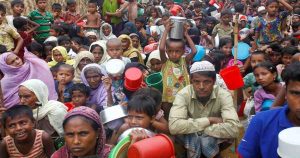

The Council of Foreign Ministers of the Organisation of Islamic Cooperation (OIC) will discuss ‘genuine steps’ on Thursday in Kuala Lumpur what the OIC and the international community should take to address the root causes of violence in the Rakhine State of Myanmar.The meeting is expected to urge the Myanmar government to allow the delivery of humanitarian assistance to Rakhine State, address the root causes of the violence, and widen the scope of dialogue among the groups to ensure the return of the displaced Rohingya population to their homes in safety and dignity, the OIC said in a statement ahead of the meeting.The OIC foreign ministers will hold the ‘extraordinary meeting’ in the Malaysian capital upon the request of the Malaysian government to discuss the situation of the Rohingya Muslim minority in Myanmar.
State Minister for Foreign Affairs M Shahriar Alam will represent Bangladesh at the OIC meeting and uphold Bangladesh position, a Foreign Ministry official told UNB.Some 65,000 Rohingya people entered Bangladesh since October 9 last and Bangladesh demanded Myanmar to take back all Myanmar nationals staying in Bangladesh, including documented, undocumented and new arrivals.Quoting Malaysian Foreign Minister Anifah Aman, the Associated Press (AP) on Wednesday reported that OIC envoy for Myanmar Syed Hamid Albar will brief the ministers from the 57-member OIC about the crisis.A communique to be issued at the end of the one-day meeting is expected to call on Myanmar to “abide by its obligations under international law and prevent the worsening of what is now an acute humanitarian crisis” in its Rakhine state, where most Rohingya live, he said.It will also urge Myanmar to ensure the safe return of displaced Rohingya, Anifah was quoted as saying.Anifah said Malaysia will push for Myanmar to allow “unimpeded access for humanitarian assistance to reach the Rohingya.”Myanmar’s army began a crackdown in Rakhine in October after nine policemen were killed in attacks along the border.The government and the army have rejected accusations of abuses and killings, saying they have simply been conducting a “clearance operation” in the region.The meeting will also discuss the situation of over 120,000 displaced and refugee Muslims within Myanmar, according to OIC officials.Meanwhile, Swedish Ambassador to Bangladesh Johan Frisell on Tuesday said it is clear that no long-term solution to the Rohingya crisis can be found unless violence in Rakhine comes to an end.“The humanitarian situation is serious for the newly arrived refugees. With the impressing efforts by different agencies and organisations, we hope that the needs will be met,” he said.The three Nordic ambassadors to Bangladesh — Johan Frisell, Ambassador of Denmark Mikael Winther and Ambassador of Norway Sidsel Bleken — visited Cox’s Bazar on January 15-17.They appreciated the efforts that the government of Bangladesh is undertaking to address the situation.The purpose of the visit was to gain a better understanding of the humanitarian situation for official and undocumented Rohingya refugees, and to meet UN agencies, NGOs and local authorities.The recent influx of Rohingyas from northern Rakhine state was a special focus of the visit.The extensive three-day programme included visits to Leda makeshift camp and Nayapara registered camp as well as the camps in Kutupalong.Sidsel Bleken said, “I’m impressed how the government of Bangladesh and humanitarian organisations have handled the current influx of more than 65,000 Rohingyas escaping atrocities and violence in Myanmar.”“My impression after our visit to Cox’s Bazar is that the Rohingyas have a desire to return to the Rakhine state, rebuild their houses and get back to work as soon as possible,” said Norwegian Ambassador Sidsel Bleken.Mikael Winther said, “I recognise the big burden that is put on Bangladesh with the large number of Rohingya refugees. It affects the local population and it affects Bangladesh’s security.”“From a humanitarian point of view, it’s important that all vulnerable Rohingyas have access to basic social services – irrespective of their legal status”.
source:UNB