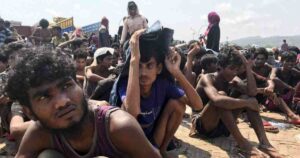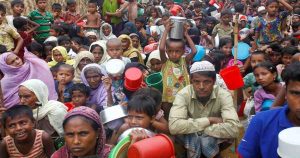

A high-profile delegation of the UN Security Council arrived here on Saturday afternoon to see the brutalities that the Rohingyas faced in Myanmar’s Rakhine State and steps taken by the government of Bangladesh.
UNSC President for the month of April, Gustavo Meza-Cuadra, is leading the delegation, says an official.
They will stay here overnight and will visit Kutupalong Rohingya camp on Sunday to see first-hand the impacts of the Rohingya crisis.
The UNSC team will spend over 3 hours at Rohingya camp from 9:20am to 12:45pm on Sunday, according to an official at the Foreign Ministry.
Earlier, the delegation landed at Cox’s Bazar airport at 4:15pm by a special aircraft and then they reached Royal Tulip Hotel on Inani beach, Cox’s Bazar.
State Minister for Foreign Affairs M Shahriar Alam and acting Foreign Secretary Rear Admiral (retd) M Khurshed Alam received the UNSC delegation in Cox’s Bazar.
They are scheduled to exchange opinion with Foreign Ministry officials, representatives of UN agencies, Commissioner of Cox’s Bazar Refugee Relief and Repatriation Commission (RRRC) Mohammad Abul Kalam and representatives of law enforcement agencies on Saturday evening.
The delegation members will leave hotel for Kutupalong Rohingya camp at 8:20am on Sunday and at first they will go to no man’s land along the Bangladesh-Myanmar border.
They will talk to Rohingyas in various blocks in Kutupalong camp and will brief media at 12:45pm at the camp on Sunday.
The UNSC team is scheduled to leave Cox’s Bazar for Dhaka at 3:30pm on Sunday.
They are scheduled to meet Prime Minister Sheikh Hasina at Gonobhaban at 9:30am on Monday and will leave Dhaka at 10:30am for Myanmar.
State Minister for Foreign Affairs M Shahriar Alam is expected to host a reception in honour of the UNSC team at Radisson Blu Dhaka Water Garden on Sunday evening.
The UN Security Council is composed of 15 members with five permanent members — China, France, Russian Federation, the United Kingdom and the United States — and 10 non-permanent members.
The UNSC visit was originally scheduled for April 27-28.
Over 700,000 Rohingyas fled to Bangladesh, and the influx, though reduced in recent weeks, continues despite Myanmar’s assurances of stopping violence in Rakhine.
Meanwhile, spokesman for the UN Secretary-General Stephane Dujarric has said new refugees are still arriving, with some 8,000 new arrivals since January 2018.
“The government and people of Bangladesh have displayed extraordinary generosity towards Rohingya refugees, with support by the international community,” he said in a regular briefing at the UN headquarters on Friday.
The latest round of food distribution reached over 470,000 people. Over 5,000 tube wells and 47,000 latrines have been built, and more than 90,000 children have been receiving primary school education.
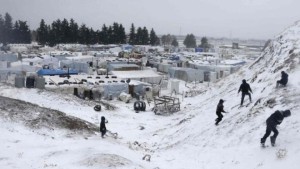
The spokesman said humanitarian partners on the ground also conduct protection monitoring missions to support survivors of sexual and gender‑based violence, and are also strengthening preparedness efforts to the incoming cyclone and monsoon season.
Over 65,000 households have received supplies to make their existing shelters monsoon-proof.
More than 15,000 refugees in particularly at-risk areas will soon be moved to safer ground, and construction of access roads is also progressing.
He said the joint response plan for the Rohingya humanitarian crisis, launched in mid-March, to date, is only 9 per cent funded.
It requests $951 million to help respond to the needs of some 1.3 million people, both Rohingya refugees and vulnerable members of the host community, until December 2018.