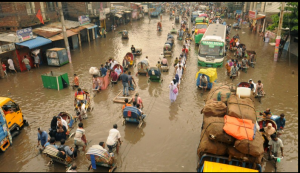

Bangladesh has so far received US$ 448.65 million as assistance from different agencies to face adverse impacts of climate changes, Environment and Forests Minister Anwar Hossain Manju told Parliament on Sunday.
Besides, Bangladesh got commitment of US$ 175 million from World Bank for building coastal greenbelt and conducting other activities to fight climate change, he said replying to a tabled question from Awami League MP Mohd Abdullah (Laxmipur-4).
Among US$ 448.65 million, US$ 130.2 million came from multi-donor trust fund ‘Bangladesh Climate Change Resilience Fund (BCCRF)’, while US$ 110 million from the Pilot Project for Climate Resilience (PPCR) of Climate Investment Fund, US$ 97.20 million from World Bank under different projects, US$ 40 million from Green Climate Fund (GCF), US$ 31.467 million from USAID, US$ 15 million from German agency KFW, US$ 14.58 million from Least Developed Country Fund that is run by Global Environment Facilities and US$ 5 million from GIZ, he noted.
Besides, US$ 5.2 million was received for Ecosystem based Approaches to Adaptation in the Drought Prone Barind Tract & Haor Wetland Area project, he added.
Noting that various measures are being taken to face climate change impacts, the minister said some 6760 climate resilient homes were built in the coastal areas that are vulnerable to the climate change while 550 rainwater reservoirs, 30 pond sand filters and 50 mobile water treatment facilities were set up and some solar home systems were installed in some 32 lakh houses across the country.
In reply to another tabled question from Workers Party’s MP Hazera Khatun (Women seat-39), the Environment Minister said as of December 31, 2016, effluent treatment plants (ETPs) were set up in 1,415 factories out of 1,557 that need ETPs across the country.
He said the national environment committee’s meeting held with the Prime Minister in the chair on September 16, 2009 issued a directive to install ETPs in all factories that leave liquid effluents to stop the river water pollution by the factories.
source:UNB