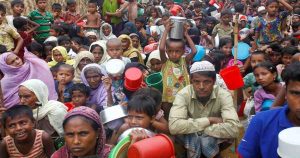

The bone-chilling cold wave sweeping over the country has factually paralyzed normal life adding untold miseries to common people for the second consecutive day Wednesday, official and local sources said.
The situation deteriorated following further sharp falls in the maximum and minimum temperatures during the past 24 hours amid blowing cooler winds from the western and north-western directions, clouds, fogs and mists in the air.
The severity of the biting cold forced thousands to stay indoors affecting business, office and normal activities throughout the day as the sun remained covered behind dense fogs, mists and clouds amid blowing stronger cooler winds.
The maximum and minimum temperatures marked sharp falls by three to six degrees Celsius during the past 24 hours ending at 6:00 pm Wednesday reducing the gap between the two temperatures to the minimum to cause the bone-chilling cold.
According to Met Office sources, the minimum temperature of 8.8 degrees Celsius was recorded at 6:00 am and maximum of 14.4 degrees at 4:00 pm Wednesday in Rangpur city against Tuesday’s 11 degrees and 20.4 degrees Celsius respectively.
Besides, the minimum temperatures recorded were 10.5 degrees Celsius at Syedpur, 10.5 degrees at Bogra, 8.58 degrees at Dinajpur and the country’s lowest of only 6 degrees Celsius at Iswardi at 6:00 am Wednesday.
The intensity of biting cold became unbearable following reduction of the gap between the minimum and maximum temperatures to only three to six degrees Celsius at most places in the sub-Himalayan region Wednesday.
The number of patients with cough, fever, asthma and other climate change related diseases has been increasing again during the past couple of days, hospital sources and physicians said.
Health officials here told BSS Wednesday evening that adequate steps have been taken in all government hospitals and upazila health complexes to provide proper treatments to the increasing number of cold-related patients.
The administrations, NGOs, pourashavas, voluntary, professional, socio-cultural and charitable organisations, business bodies, banks and other institutions have intensified distribution of warm clothes among distressed cold-hit people to mitigate their sufferings.
District Relief and Rehabilitation Officer of Rangpur Abdus Salam said distribution of warm clothes continues among the cold-hit distressed people in the district as elsewhere in the northern region.
“We have got more allocations of 6,300 pieces of blankets from the government after completing distribution of 6,700 pieces of blankets among the cold-hit people in Rangpur so far,” he added.
Horticulture Specialist of the Department of Agriculture Extension Khandaker Md Mesbahul Islam Khandaker said the prevailing weather might affect normal growth of Rabi crop plants including Boro seedbeds if the situation deteriorates further.
Agriculture and Environment Coordinator of RDRS Bangladesh Mamunur Rashid the situation sharply deteriorated during the past 24 hours till Wednesday evening causing immense sufferings to the people due to adverse climate change impacts.
Associate Director Agriculture of BRAC International (South Asia and Africa) Dr MA Mazid said germination of newly sowed Boro seeds might be hampered due to cold injuries and lower temperatures if the situation continues for the few days.
Reports reaching here from the remote areas said sufferings of thousands of people living in the sandy char areas in Kurigram, Lalmonirhat, Gaibandha, Rangpur, Jamalpur, Nilphamari, Bogra and Sirajganj districts on the Brahmaputra basin mounted further.
-newsnextbd