
The Trump administration declared on Wednesday that Myanmar’s brutal crackdown on its Rohingya minority constituted “ethnic cleansing,” a long-anticipated designation that will open the door to sanctions against the country’s military commanders and intensify pressure on its civilian leader, Daw Aung San Suu Kyi.
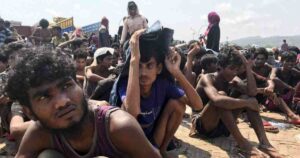
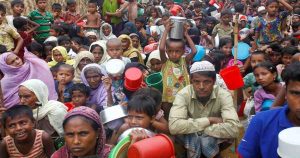
Secretary of State Rex W. Tillerson, who visited Myanmar last week, said that “horrendous atrocities” by Myanmar’s military, security forces and vigilantes had forced “hundreds of thousands of men, women and children to flee their homes” and seek refuge in neighboring Bangladesh.
“After careful and thorough analysis of the facts,” Mr. Tillerson said in a statement, “it is clear that the situation in northern Rakhine State constitutes ethnic cleansing against the Rohingya.”
The United States, he said, will pursue “targeted sanctions,” most likely against military leaders implicated in the crackdown. But administration officials continued to rule out broader sanctions against Myanmar’s government because they said it could jeopardize the country’s delicate transition to democracy after decades of repressive military rule.
Mr. Tillerson also stopped short of explicitly calling for an international investigation into the atrocities, which disappointed some human rights advocates, though he did call for a “credible, independent investigation.”
Continue reading the main story
Related Coverage
Aung San Suu Kyi, a Much-Changed Icon, Evades Rohingya Accusations SEPT. 18, 2017
Pope’s Planned Visit to Myanmar Risks Stoking Religious Tensions AUG. 22, 2017
270,000 Rohingya Have Fled Myanmar, U.N. Says SEPT. 8, 2017
ADVERTISEMENT
Continue reading the main story
Critics said that Myanmar’s government had proved itself, through previous investigations, unable to uncover the truth of its persecution of its Muslim minority, which has included executions, gang rapes and burnings of villages.
“Right now, it gives them an escape hatch,” said John Sifton, the Asia advocacy director for Human Rights Watch. “The Burmese government and military are incapable of carrying out credible investigations,” he added, using the old name for Myanmar.
Still, Mr. Sifton cheered the new language. “It’s extraordinarily significant when the United States formally designates something as ethnic cleansing,” he said. “Ethnic cleansing is a crime against humanity.”
The administration’s invocation of “ethnic cleansing” came on a day that echoed with the history of past atrocities against Muslim minorities. In The Hague, an international court sentenced Gen. Ratko Mladic, the former Bosnian Serb commander, to life imprisonment on Wednesday for genocide, war crimes and crimes against humanity.
But the fact that General Mladic was finally brought to justice, nearly a quarter century after the crimes he committed in the former Yugoslavia, attests to the hurdles that stand in the way of a full moral reckoning with episodes of genocide and mass atrocities.
The Trump administration has more immediate goals in mind in calling the Rohingya crackdown “ethnic cleansing.” Mr. Tillerson said the United States wanted Myanmar’s government to put in place conditions that would allow refugees to return from Bangladesh to Rakhine State.
Since late August, more than 620,000 Rohingya have fled Myanmar, which is majority Buddhist, for Bangladesh. Only about one-third of the Rohingya who lived in Myanmar now remain in the country. A recent report by Human Rights Watch said there was also evidence of widespread rape of Rohingya women and girls by uniformed members of the military.
Human rights advocates said the administration’s use of the label “ethnic cleansing” would add to an international pressure campaign against Myanmar that they hope will come to include a global arms embargo and a suspension of military-to-military relations